





Madhu Bazaz Wangu | Author | Mindful Writing Meditation
40618
home,page-template,page-template-full_width,page-template-full_width-php,page,page-id-40618,ajax_fade,page_not_loaded,,select-theme-ver-2.1,vertical_menu_enabled, vertical_menu_width_290,side_menu_slide_from_right,wpb-js-composer js-comp-ver-6.9.0,vc_responsive

Madhu Bazaz Wangu

Writing Meditation Practice

imm
Chance Meetings

Welcome Mindful Writers &
Mindful Creators!

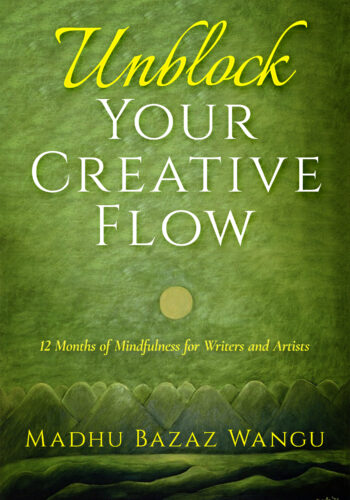
Unblock Your Creative Flow
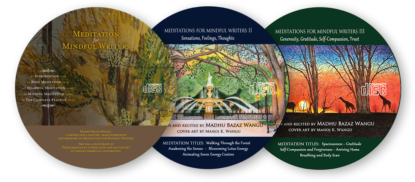
Meditations for Mindful Writers CD set
About

Mindful Meditation

Find Out More
Online Mindful Writers Group

Meditations & Prompts

Visit and Join
Online Store

Books & CDs

Visit the Store
Madhu Wangu

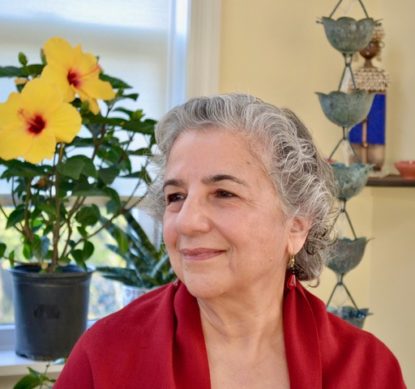
The founder of Mindful Writers Groups and Retreats, Dr. Madhu Bazaz Wangu has won awards from Writer’s Digest, Feather Quill, Readers Favorite, Next Generation Indie Book, Indie Excellence, and TAZ Awards. She inspires novice as well as advanced creative people to become better writers and creators, and authentic human beings by following the practice of Writing Meditation.

Madhu shares time-honored practices using personal anecdotes to teach Writing Meditation Practice (WMP). The practice is not only entertaining but also life transforming. Introduced to writers in 2011, it provides daily skills, tools and rituals for making yourself the better versions of you.

Madhu has written about her own struggle, trials and tribulations as well as pleasurable experiences that have come her way and taught her what it means to feel awe, wonder and afterglow of creative flow.  Currently she is writing her eleventh book, the fifth fiction, tentatively titled, Meaning of My Life.

Dr. Wangu is a regular workshop presenter at writing conferences. She was the Featured Author at Beaver County Book Fest in 2017, Inaugural Guest at International Indo-American Literary Festival, 2020. That year she won Pennwriters Meritorious Award. In May 2023 she was the Lunch Keynote Speaker at Pennwriters Annual Conference.

Read More

Online Mindful Writers Group

  • Tuesday, 10 March, 2026

    You’re learning to connect with your Authentic Self, your awareness that is nothing but joy, contentment and peace. This conscious Self knows you better than you know yourself. When awakened, it never fails to lend its ear or point you toward the right direction. You may converse with it in journaling, in meditation, paying attention to your intuitions at any time, any place. It is your personal therapist—wise and kind.  We are learning to differentiate between conceptual thought and deep awareness. We discussed how attention can be cultivated and how awareness rises when you stay embodied and live in the present. Attention on breath and being alive to the present moment is the beginning of the practice of mindfulness.  You continue to practice Silent Meditation and Body Scan meditation. Sitting still......

  • Thursday, March 5, 2026

    Myths and Misconceptions about Meditation  {“Misconceptions and Myths about Meditation” Adapted from Meditation in Plain English by Bhante Gunaratana, Wisdom Publications, (First Pub. 2011)}...

  • Tuesday, March 3, 2026

    The following post was partly inspired by Bhante Gunaratana’s book Meditation in Plain English, Wisdom Publications, 2011. The meditation we practice here is called Vipassana or Insight meditation. Vipassana is exercise in attention and awareness. When we practice it, we must toss out everything in our mind except awareness of sitting still and breathing. This is not easy to do. We keep practicing diligently and one day our conscious thought, the ego, moves like a cloud and lets the sun of awareness shine. The pure awareness hides behind our ego which is nothing but our judgement, evaluation and criticism of people and events. Such mental images hide awareness.  Continuous focus on the breath at the tip of your nose, (or chest or belly) takes you deeper and deeper and makes you aware of your sensations, feelings......

More Posts

You are what your deep, driving desire is. As your desire is, so is your will. As your will is, so is your deed, as your deed is, so is your destiny.
—Bhrihadaranyaka Upanishad IV.4.5